First, what does IPTV stand for? IPTV stands for Internet Protocol Television. It is an alternative to the mainstream antenna, cable, and satellite TV content-delivery technologies.
Watch4K is a premium IPTV provider in the Netherlands, offering access to tens of thousands of global TV channels and movies in HD and 4K. In this article, we answer questions such as “What is IPTV and how do I get it?” and “How does IPTV work?”
Read on for a definitive guide on IPTV technology.
Key Takeaways
- IPTV transmits TV content as data packets over the internet, and it is an alternative to antenna, cable, and satellite TV.
- Modern IPTV service providers allow subscribers to watch IPTV content across a variety of devices, such as smart TVs, mobile phones, tablets, and computers.
- A stable, high-speed internet connection enables high-quality IPTV content in HD and 4K.
Table of Contents
- What Is IPTV, and How Do I Get It?
- How Does IPTV Work?
- IPTV Content Options
- Frequently Asked Questions
- IPTV: What Is It, and How Does It Work?
What Is IPTV, and How Do I Get It?
As mentioned earlier, IPTV is like cable TV. It’s a television content-delivery technology. Unlike cable TV, however, the TV content does not travel as high-frequency electrical signals through coaxial cables or pulses of light through fiber-optic cables. Instead, it travels as data packets over high-speed internet.
Conventionally, IPTV providers transmit just the live broadcasts of TV networks like BBC, CNN, Discovery Channel, and ESPN. However, modern-day IPTV providers deliver many types of content, not just live television broadcasts.
The best IPTV provider provides access not only to live TV broadcasts but also to video-on-demand (VOD) shows and movies. They also let subscribers watch shows from streaming sites, over-the-top (OTT) platforms, media producers, and other non-TV content distributors.
How Do You Get IPTV Service?
To get IPTV service, you should sign up for a subscription plan with an IPTV service provider like Watch4K. Then you must have a compatible device, which can be a mobile phone, tablet, computer, or smart television.
You’ll need to know how to install IPTV on your device if you’re using a mobile phone, tablet or computer. Specifically, you’ll download your service provider’s IPTV app (or an equivalent generic IPTV app), use your credentials from your IPTV service provider to log in to the app or access your IPTV provider’s playlist, and start watching from there.
Some IPTV service providers also allow subscribers to access their services via a web URL.
How Does IPTV Work on a TV?
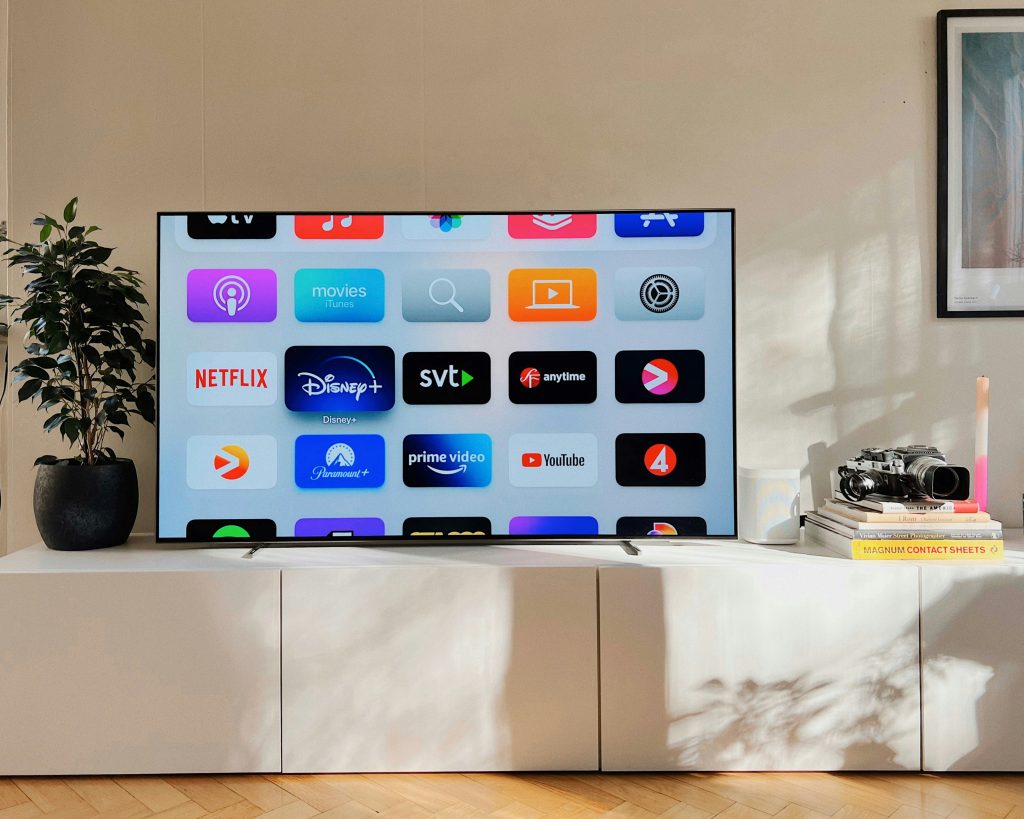
To watch IPTV through your television, you can install the IPTV app on your TV and access the IPTV channels from there. If you don’t have a smart TV, you’ll need to use a media stick to enable IPTV app use.
An IPTV set-top box is another alternative, and it will work with both smart and non-smart TVs. An IPTV box, which plugs into a TV’s high-definition multimedia interface (HDMI) port, closes or completes the private, closed network between the IPTV service provider and the subscriber’s TV.
Note: The IPTV box serves the same function as cable or satellite set-top boxes. The IPTV box receives and decodes data packets; cable set-top boxes receive and decode electrical signals or light pulses; and satellite set-top boxes receive and decode satellite TV signals.
How Does IPTV Work?
IPTV works pretty much like the antenna, cable, and satellite TV. A service provider sits on one end, and the subscriber sits on the other. The IPTV service provider supplies the content, and the subscriber pays for access.
How does IPTV streaming work?
The IPTV Service Provider
The IPTV service provider acquires the right to distribute television and videos from media producers, TV networks, OTT platforms, and content distributors. The provider then builds its IPTV service infrastructure, including cloud servers, for content storage and delivery.
The IPTV Service Subscriber
The IPTV service subscriber loads the IPTV app on their mobile phone, tablet, computer, or television. They log in to the service, then browse the IPTV channel list or the videos available on demand.
The Subscriber’s Content Options
On their IPTV app or IPTV box interface, the subscriber clicks on a specific piece of content, and the app (or the IPTV box) sends their selection as a request via the internet to the IPTV service provider.
The IPTV Service Delivers the Requested Live TV Feed or Video
The IPTV service receives the subscriber’s request. It then breaks down the requested live TV or VOD content into small data packets and transmits the stream of packets back to the subscriber through a private, closed network or through the open internet, depending on its infrastructure and setup.
The Subscriber’s Device Receives the Data Packets
Once the subscriber’s mobile phone, tablet, computer, or television receives the data packets, the IPTV app converts them into the standard audio and video format the device can play.
How does the IPTV app work? The IPTV app works like a media player. Its primary function is to decode the data packets the IPTV service provider sends over. It also provides the subscriber with content-selection options and account management functions.
Alternatively, if you are using an IPTV stick or set-top box on your TV, it will be your IPTV stick or box that will receive the transmission, decode the packets, and convert them into viewable, playable media on your television.
What is an IPTV Box, and how does the IPTV box work? The IPTV box is hardware that ships out pre-installed with an IPTV program or app. Like the stand-alone app, it can transmit, receive, and decode data packets. Thus, they serve as a crucial bridge between a television and an IPTV service provider.
IPTV Content Options
This may vary by service provider, but IPTV subscribers usually have live TV, time-shift TV, catch-up TV, and video-on-demand content options.
- Live TV: The subscriber can choose among thousands of TV channels or networks. Like cable or satellite TV, the number of available channels depends on the IPTV subscription plan. The higher the plan, the more channels are available.
- Time-Shift TV: This is live TV with a bit of buffering, allowing the subscriber to pause and rewind TV shows as they air in real time.
- Catch-Up TV: The IPTV service provider allows subscribers to watch past TV broadcasts on demand. On-demand TV broadcasts are available for a limited time, usually several days.
- Video on Demand: Video on demand means picking a movie, show, documentary, or some other type of content from a “video library.” The videos are available for a while, which could be months or years.
Video quality may also vary with the subscription tier. For instance, ultra-HD options may be available only to the more expensive plans. Note: At Watch4K, the 4K ultra-HD video quality option is available on all plans.
Frequently Asked Questions
What is IPTV, and how does it work?
How does an IPTV player work?
How does an IPTV service work?
What is the best IPTV service?
The best IPTV provider can vary depending on a subscriber’s preferences. Someone who wants live TV, particularly sports content, will appreciate an IPTV service provider that uses a private, closed, and fully managed network for delivery and requires the use of an IPTV set-top box for the least amount of latency.
However, a subscriber who wants variety and flexibility above all things will appreciate an IPTV service provider that aggregates thousands of global TV channels, content from OTTs, and videos from media producers and other types of content distributors in one place.
Do I need a special device for IPTV?
Can IPTV work on any smart TV?
Can IPTV replace cable TV?
Is IPTV better than satellite TV?
IPTV: What Is It, and How Does It Work?
IPTV is a TV content-delivery technology like antenna TV, satellite TV, and cable TV. Unlike antenna, satellite, and cable TV, however, IPTV transmits content as data packets via a private, closed network or through the public, open internet. IPTV is an excellent TV option if you have a high-speed internet connection.